Linda K. Wertheimer

Journalist and Author of Faith Ed

  • Why All Should Care about Supreme Court Rulings on School Prayer, Religious School Funding

    Why All Should Care about Supreme Court Rulings on School Prayer, Religious School Funding

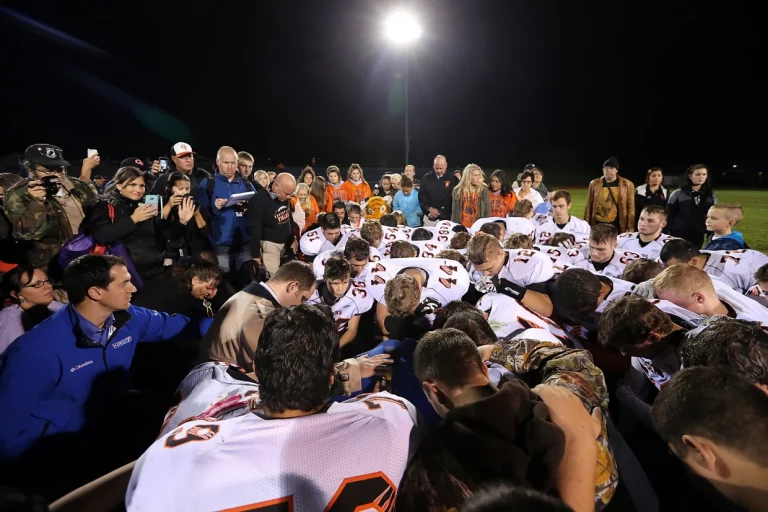
    How will educators in the upcoming school year make sense of the recent Supreme Court ruling on public school prayer? As longtime First Amendment scholar Charles C. Haynes told me for my commentary for the Boston Globe Magazine, the Kennedy v. Bremerton ruling has blurred the lines separating church from state. The majority opinion said it was fine for Coach Joe Kennedy to pray at midfield right after the game ended, even though evidence presented many times over showed that Kennedy encouraged his own team – as well as the opposing team – to join him in his prayer circle. He was, in fact, proud of it. You can read more about the case and my own take here.

    The ruling in the coach’s favor has raised concerns among church/state advocates that it will weaken 60 years’ worth of precedents that made it clear school representatives cannot lead students in prayer. Those same rulings made it clear that clergy and others also cannot lead students in prayer at an event, whether it’s graduation or a football game, because that too makes it seem as if a school district is promoting prayer. The court this time, though, ruled in favor of the coach, citing the free exercise clause. For religious liberty advocates, it was a tremendous victory. If you’re interested in making your own conclusions, read the majority opinion, the dissent and accompanying amicus briefs, all available online at the Supreme Court website. How, too, will the Carson v. Makin decision, which lets parents use public money to attend private religious K-12 schools, affect voucher and charter school programs around the nation?

    Meanwhile, June 24 marked the 30th anniversary of the landmark Lee v. Weisman ruling, which prohibited clergy-led prayer at public school graduations. The case started at a Providence middle school, and I interviewed all four Weisman family members for a Washington Post article looking back at what they went through. The parents thought they could resolve the issue with a letter and a conversation when they complained about a pastor asking everyone to bow to Jesus at their daughter Merith’s graduation. But every step of the way, the Providence school system fought the parents’ attempt to stop the prayers, ultimately taking the case to the Supreme Court. Read my article, in the Post’s Retropolis section, here.

    Also sparked by the recent rulings, I wrote a tips piece for education writers on covering church/state issues for The Grade, a blog about education reporting.

    Let me know what you think of the articles. I’d like to keep the conversation going. And, if you’re attending this year’s Education Writers Association conference in Orlando, make sure you attend the Lightning Talks on Monday, July 25. I’ll be giving a talk on how to uncover clashes on church/state issues in your community.

    Thanks, as always, for reading!

    Linda

  • As Faith Ed nears its 6th birthday, author appears on two podcasts and works on new book

    Greeting, Faith Ed subscribers! I know it’s been a long time – perhaps nearly two years – since I’ve sent out a newsletter. I thought this was a good time to reconnect, given the state of our world and continued concerns about a rise in religious bigotry and racism in America.Faith Ed turns six years old this summer, and I still hear from new readers who have discovered the book and want to learn more about how religion is taught in the school and the experience of religious minorities. I still give occasional talks and most recently, I did interviews for two different podcasts. I’m including a photo from the first podcast, Sylvia & Me. Many thanks to Sylvia Beckerman for featuring me and Faith Ed in a wide-ranging conversation about teaching about religion, church/state issues, my own experiences in childhood and what the landscape looks like today. You can listen to the Sylvia & Me podcast at this link. Check out other Sylvia & Me episodes, too, for a wide array of programs on different women authors and entrepreneurs.


    In a coincidence of timing, Dr. Robert Hunt, a Southern Methodist University theology professor who interviewed me for his podcast, aired the episode this week, too. You can listen to my interview on Interfaith Encounters at this link.

    Many thanks, too, to Dr. Hunt, for having me as a guest on his podcast. If you’re interested in learning more about religion, I suggest taking a listen to his other podcast episodes, too.

    During the pandemic, I, of course, did not give any in-person talks, but I did do some virtual talks for high school and college classes and also gave a virtual interfaith lecture for Chautauqua Institution last summer. I had hoped to give it in person at the esteemed Hall of Philosophy, but that was clearly not to be.

    I continue to write occasional commentaries on the importance of fighting religious bigotry, including a recent piece on raising our children to be upstanders for The Washington Post.

    This past school year, I was a Spencer Fellow in Education Journalism at Columbia University’s School of Journalism, and did research for a long-term project on teaching about racism in the schools. Many thanks to the Spencer Foundation and Columbia for this opportunity and to my wonderful mentors/advisers – LynNell Hancock, Sam Freedman and Amy Stuart Wells. Thanks, too, to Jelani Cobb for letting me and other Fellows audit his Covering Race class. Our class of 12 was on Zoom, but by the end, it felt like we were almost a family. We had discussed so many of the issues happening across the country for three hours every week.

    I began my own research on teaching about racism long before the latest debate began over Critical Race Theory and schools. It’s been pretty clear that many opponents have little concept of what CRT is or what schools actually do or don’t do regarding teaching about racism in the schools. Read this Education Week article by Stephen Sawchuk for a good explainer of CRT  and why it became a subject of debate in public schools.

    I have been digging deep in the history of teaching about race and racism in our country. Right now, I’m working on a new magazine project on ethnic studies. I’ll keep the details minimal because I don’t want to give the story away. I recently received an Education Writers Association Reporting Fellowship to support the work. I see this project as a natural outgrowth of my previous writing and research on teaching about religion in the schools. When history teachers or any teachers teach about the world’s religions in the schools, they make it possible for students of all faiths to see themselves in the curriculum. The same goes for teaching about race and ethnicity as a part of history and literature – or any subject.

    Thanks to all of my loyal Faith Ed newsletter readers for staying on the list, though my newsletter was awol for so long! I will continue to use the space to include updates about Faith Ed-related news, but also include updates about my work on teaching about race and racism, too. If you have any ideas for a new name for the newsletter, I’m open to them! Meanwhile, stay in touch! As always, if you’re looking for a speaker on teaching about religion for your organization or conference, just contact me directly. You can find more information about what I do as a speaker on my website here.

    Wishing all a healthy, safe and fun summer!

    Linda